On Ozempic or Mounjaro in Gonzales? The Shot Takes the Weight Off. Training Keeps Your Muscle On.
If you’re on Ozempic, Wegovy, Mounjaro or Zepbound after 40, the medication is only doing half the job. Regymen’s coached functional training protects the muscle and bone that keep you strong, balanced, and on your feet while the weight comes off.
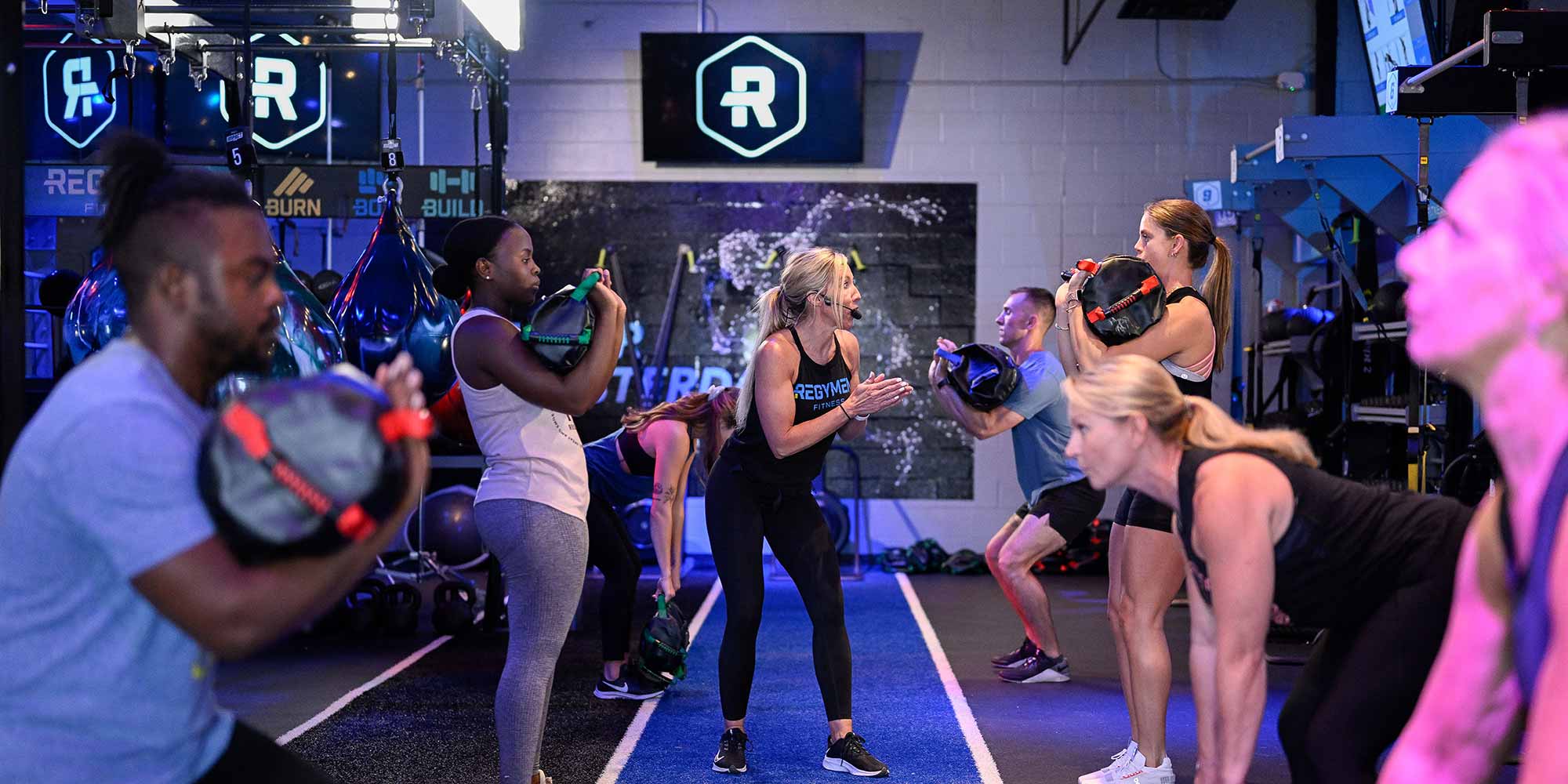
Most of our members are over 35 — and many of them are on a GLP-1, just like you.
“The shot can take the weight off. It can’t keep you on your feet. Muscle and bone are what stand between a trip on the porch steps and a broken hip — and those you have to train. That’s our job.”
COACH L · REGYMEN FITNESS ASCENSION
The Honest Problem: The Scale Doesn’t Tell You What You’re Losing
GLP-1 medications are very good at one thing: turning down your appetite. Eat less, and the scale drops — sometimes fast. But your body doesn’t get to choose to burn only fat. In the clinical trials, a large share of the weight lost came from lean mass — the tissue that includes your muscle.
In the STEP 1 trial of semaglutide (the drug in Ozempic and Wegovy), about 39–40% of the weight lost was lean mass. In SURMOUNT-1, the big tirzepatide trial (Mounjaro and Zepbound), it was about 25%. A 2026 review of 20 trials and nearly 16,000 people put the range at 25–39% across these medications.
One honest note, because you deserve straight talk: lean mass isn’t pure muscle — it includes water and other tissue — and fast weight loss from any method costs some lean mass. The drugs aren’t uniquely “muscle-eating.” But that doesn’t make the problem smaller. It makes the solution clearer: what decides whether you lose fat or muscle is protein and training — and that part is entirely in your hands.
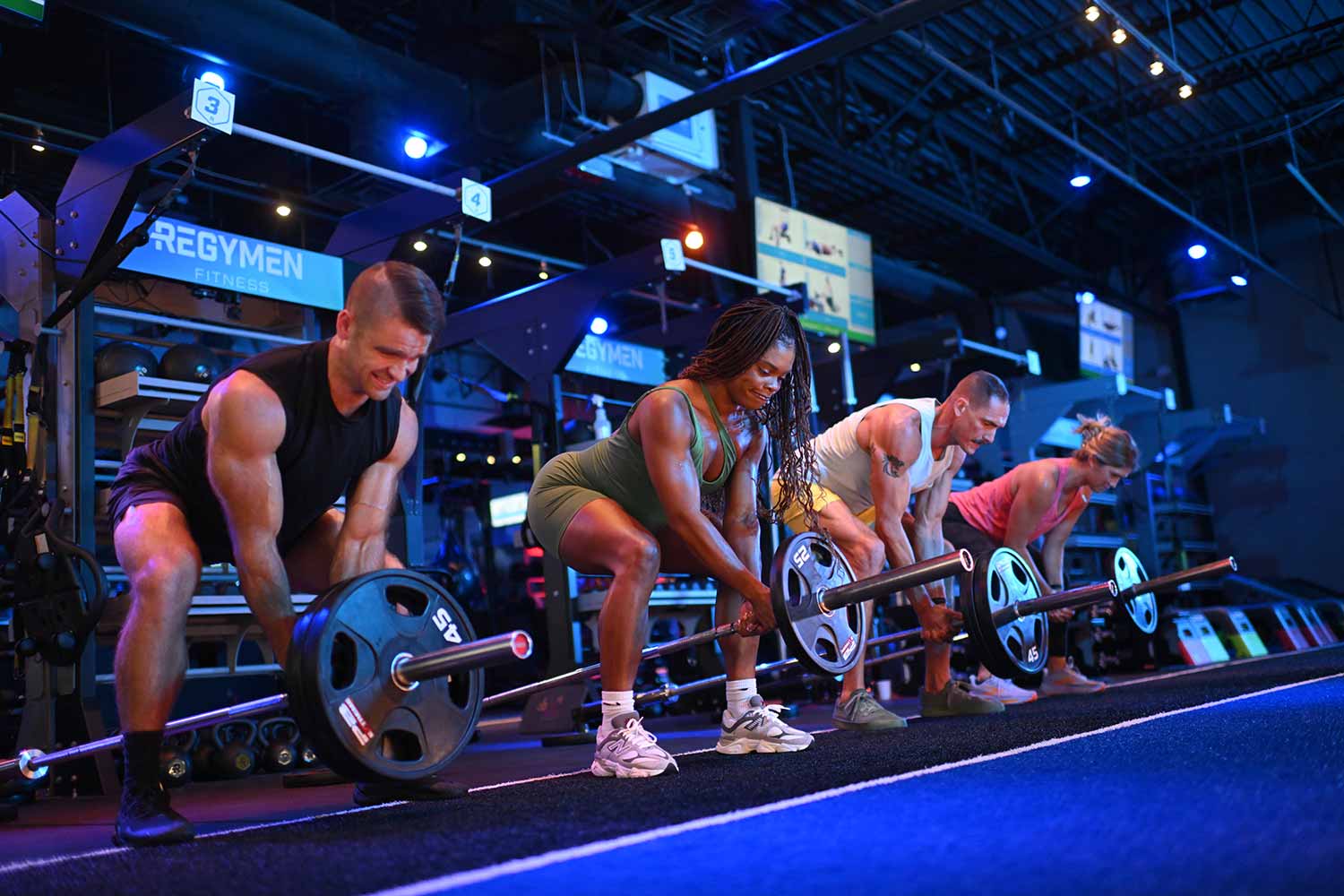
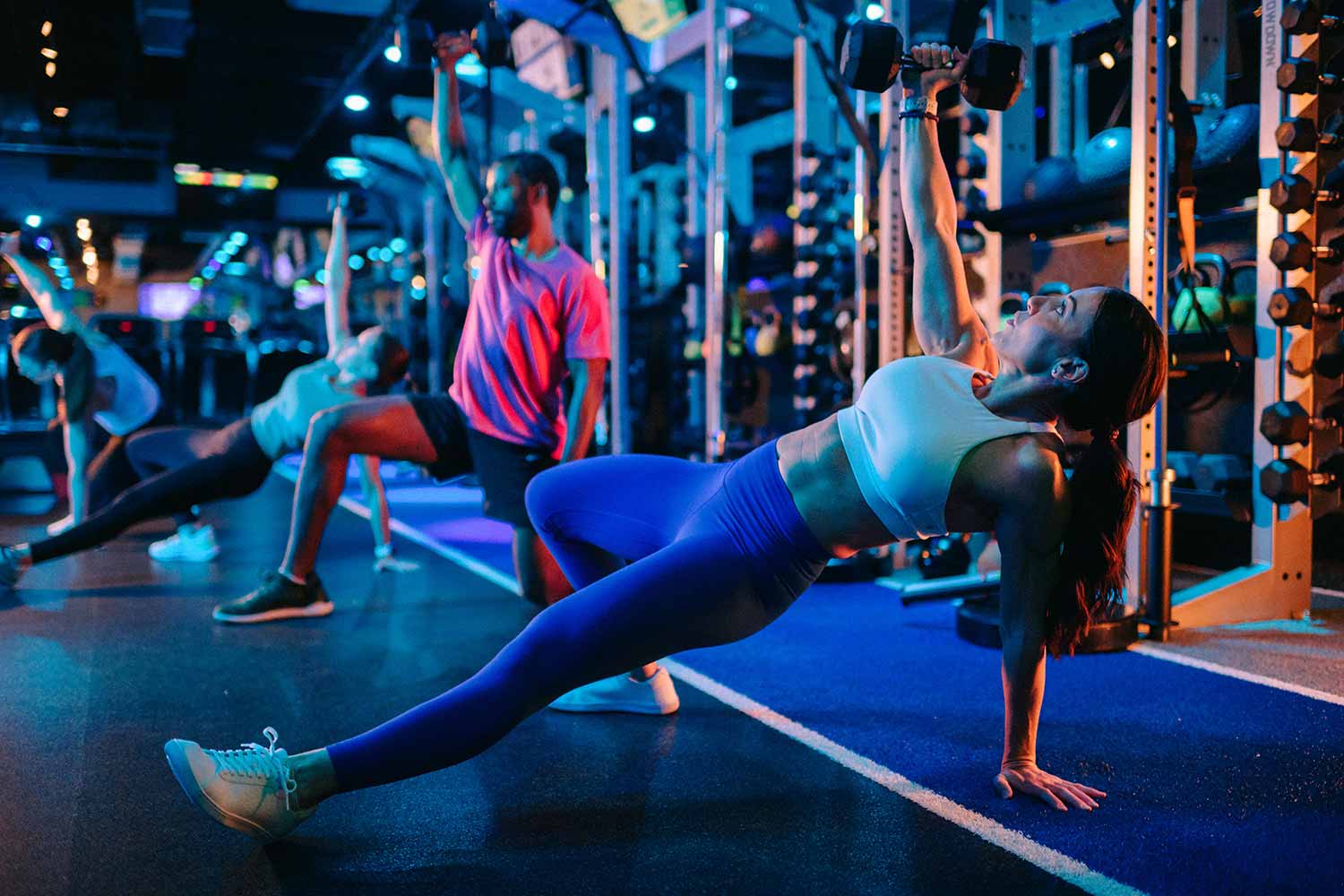
This is the work that protects you — real, coached strength training with your neighbors in Gonzales.
Why It’s Riskier After 40: Muscle, Bone, and the Fall Nobody Plans For
After 30, you naturally lose about 3–5% of your muscle per decade, and it speeds up after 50. After 50, your body also gets worse at using protein to rebuild muscle — researchers call it anabolic resistance — so you need more protein per meal to get the same response a 25-year-old gets. Layer a fast GLP-1 weight loss on top of that, and you can lose in a year what aging would have taken a decade to take.
Your bones are on the same clock. Adults lose roughly 0.5–1% of bone density per year after peak, and women can lose 2–3% per year in the first five years after menopause — up to 20% of bone density in that window. The Bone Health & Osteoporosis Foundation’s number is stark: 1 in 2 women and up to 1 in 4 men over 50 will break a bone from osteoporosis.
Now add rapid weight loss. Heavier bodies load their bones all day long; lose weight quickly and that load disappears, right when a suppressed appetite is also cutting your protein and calcium. In the one bone-specific semaglutide trial, hip bone density fell 2.6% in a year. To be straight with you: bone loss during GLP-1 weight loss is documented and real — whether it raises fracture rates is a question researchers are still watching, mostly in the oldest users. The protective behaviors are the same either way, and they’re on this page.
Here is the chain nobody connects until it’s too late. Less muscle means weaker legs, slower reactions, worse balance — so you fall more. Thinner bone means the fall a 45-year-old walks away from becomes a broken hip at 65. The CDC counts more than 1 in 4 adults over 65 falling every year, and over 95% of hip fractures are caused by falls. About 1 in 5 hip-fracture patients die within a year. Every link in that chain except the fall itself is trainable. That’s the whole point of this page.
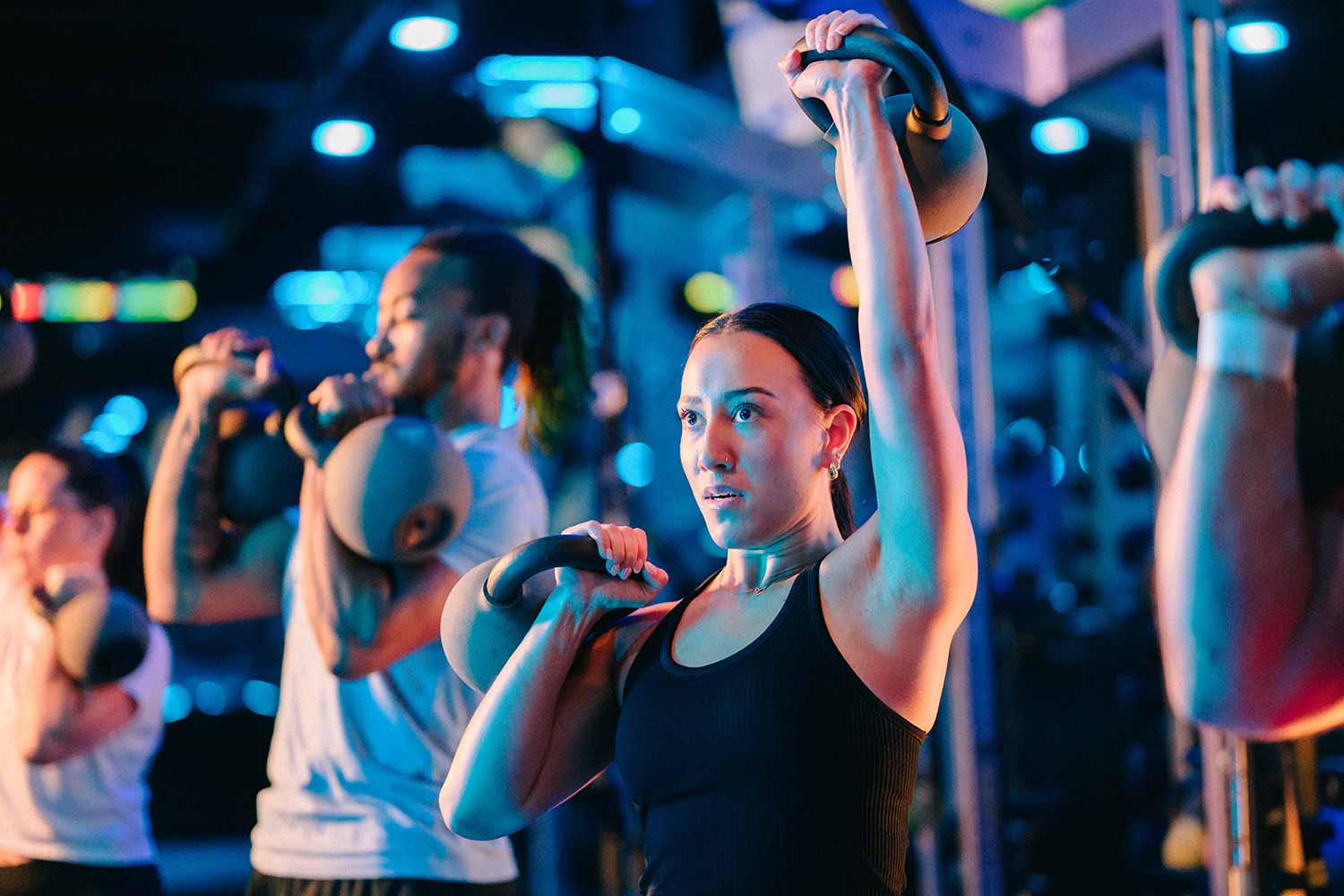
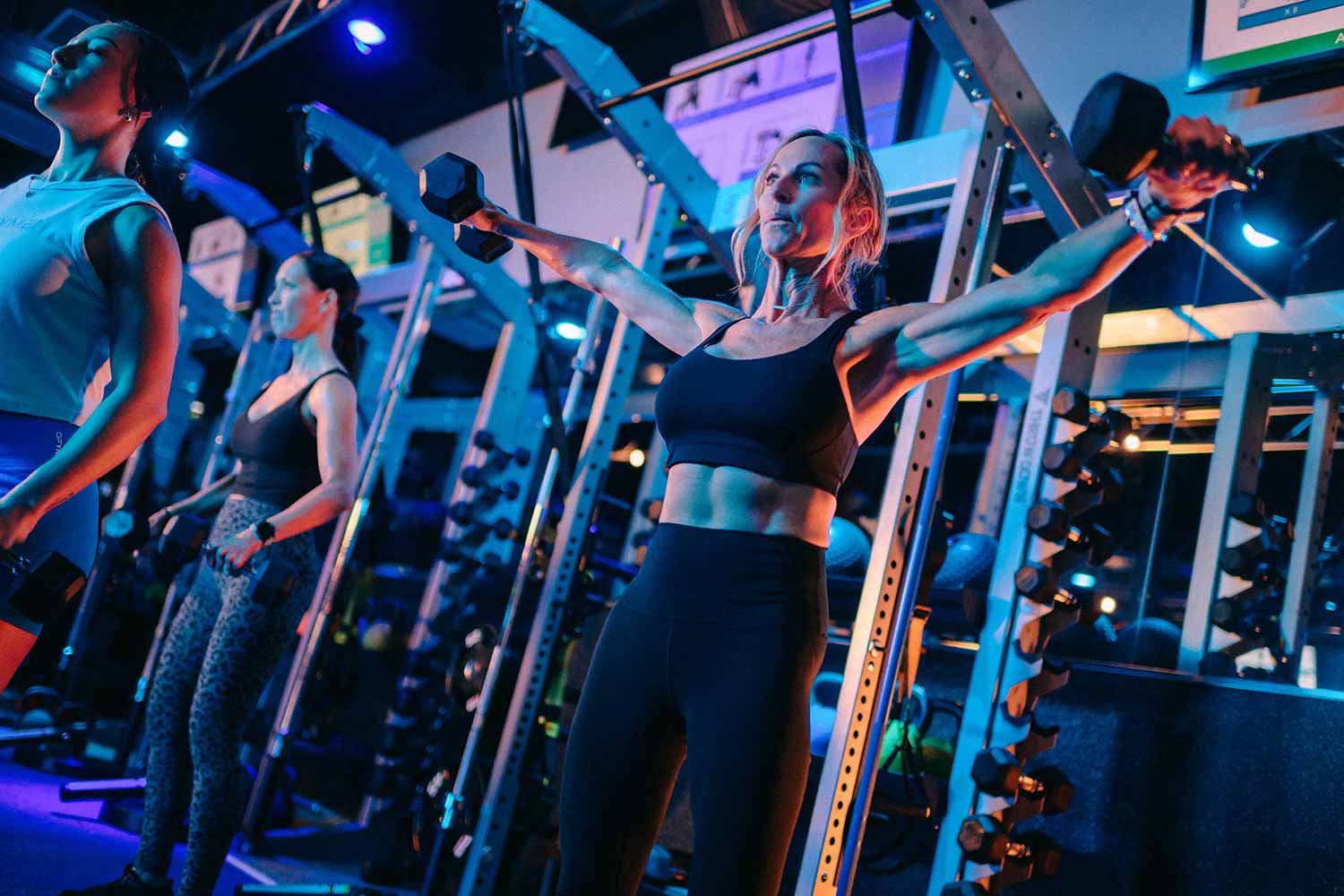
Strength you can use — pressing, carrying, standing tall. That’s what keeps you independent.
The Two-Part Fix: Lift, and Eat Enough Protein
Every serious review of the research lands on the same two-part prescription. No gimmicks, no products to sell you — just the two things that demonstrably change what kind of weight you lose.
1 · Strength training, 2–3 times a week. Progressive, full-body, compound movements. In that 20-trial review, people who combined lifestyle changes with resistance training lost the least lean mass of any group — a lean share of about 17.5%, versus 25–39% on the medications alone. Lifting doesn’t fight the medication. It finishes the job the medication started.
2 · Protein: 1.2–1.6 grams per kilogram of body weight, every day. For a 180-pound person, that’s roughly 100–130 grams a day — think 25–40 grams at each meal. The same protein target protects your bones, too: in a year-long trial, women who ate more protein during weight loss lost significantly less hip and spine bone density than women who ate less. Protein is the muscle insurance policy and the bone insurance policy.
The hard part isn’t knowing — it’s doing it on a suppressed appetite. That’s why our members get tactics, not lectures: protein first at every meal, smaller meals more often, shakes and Greek yogurt when solid food won’t go down, and a personal number built for your body instead of a generic chart. (If you have kidney disease or another medical condition, check with your provider before raising your protein.)
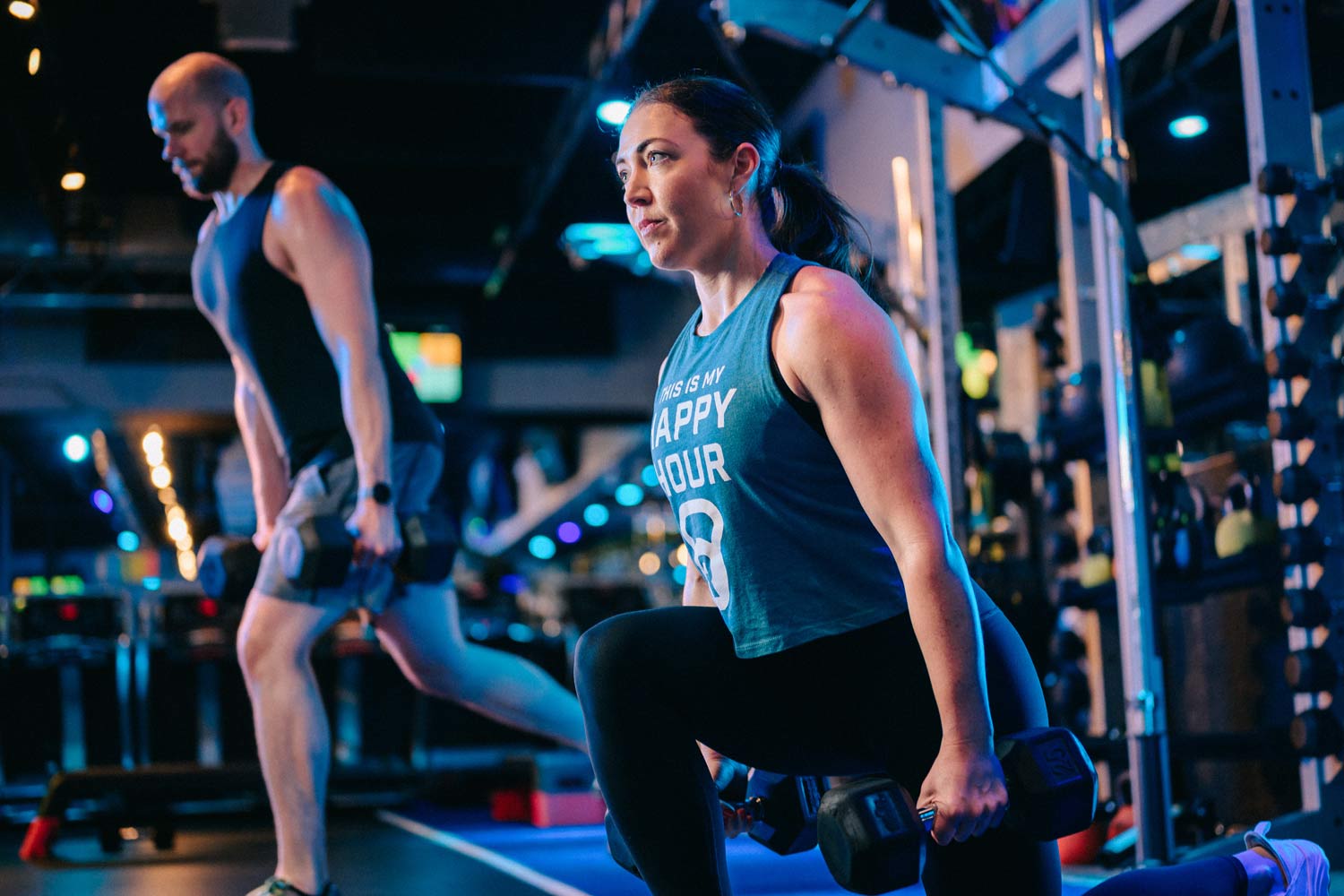
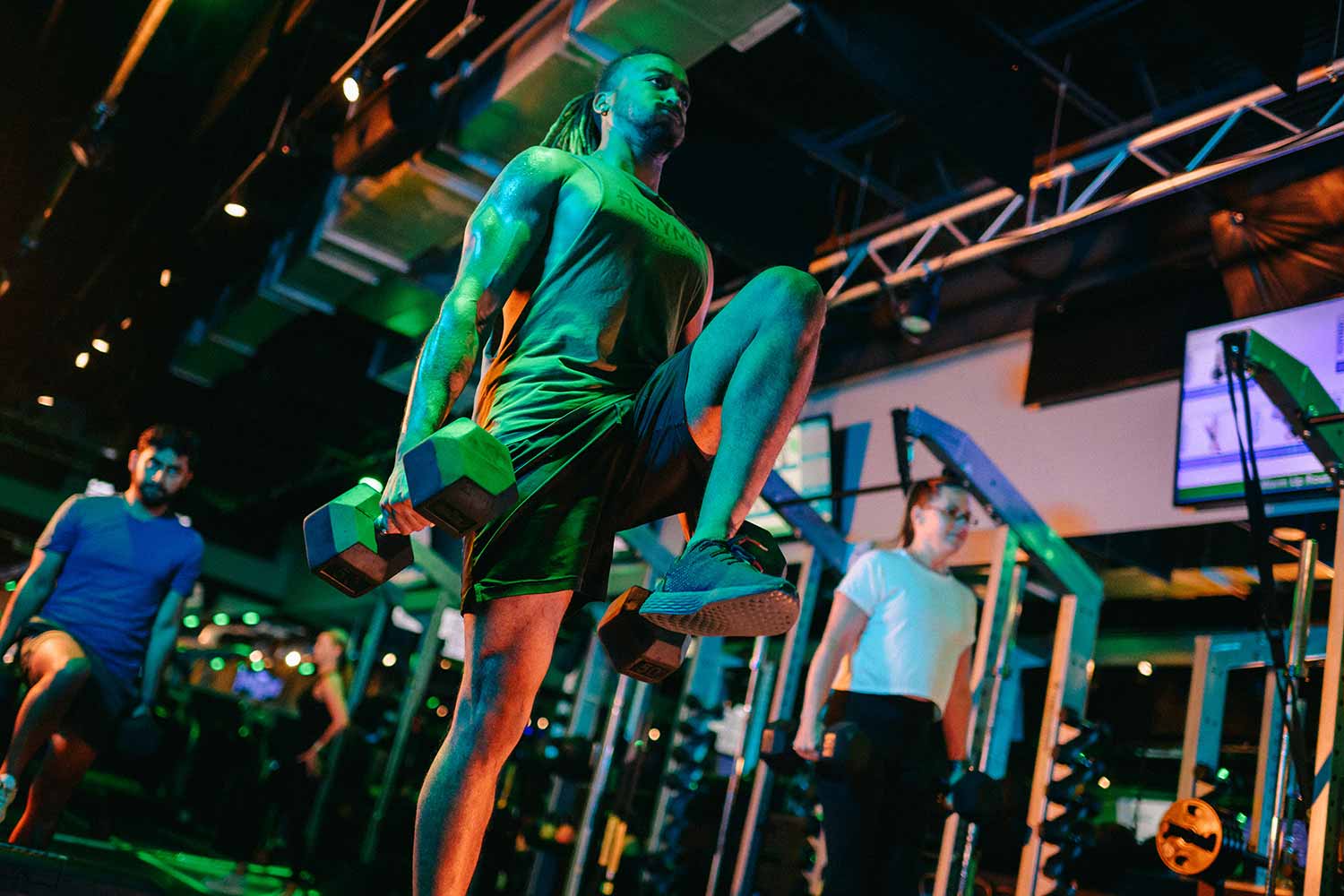
Lunges, squats, carries — the movements of real life, trained on purpose.
Never Exercised? Here’s Your Minimum Effective Start
If the shot is currently your whole plan, you don’t need to become a gym person. You need the minimum dose that protects your muscle and bone — and at Regymen, that dose is functional training, not sitting on a row of machines.
Functional means we train the patterns your life actually uses: squatting down and standing up, picking weight up off the floor, carrying it, pressing it overhead, stepping up, balancing, and yes — practicing getting up off the floor. Machines have their place, but a leg press never taught anybody to catch themselves on the porch steps. Balance and functional exercises are the ingredient with high-certainty proof behind them: in a Cochrane review of 108 trials and more than 23,000 older adults, they cut falls by about 24%, and programs combining them with resistance training cut falls by roughly a third.
And bone responds to real load. In the LIFTMOR trial, women in their 60s with low bone mass trained supervised deadlifts, squats and presses twice a week — and gained spine bone density while the control group lost it, with one minor back spasm across more than 2,600 coached sessions. Most on-point of all: in a 2024 JAMA Network Open trial, people on a GLP-1 who also exercised kept their hip and spine bone density — the group on the drug alone lost it — while losing the most weight of any group. Training didn’t blunt the medication. It protected everything the medication can’t.
Your first month here looks like this: two or three coached sessions a week, every movement scaled to your joints and your history, a coach watching your form on every set, and loads that grow as you do. No experience needed. No mirrors-and-ego scene. Most of the room is over 35, plenty are over 50, and many are on the same medication you are.
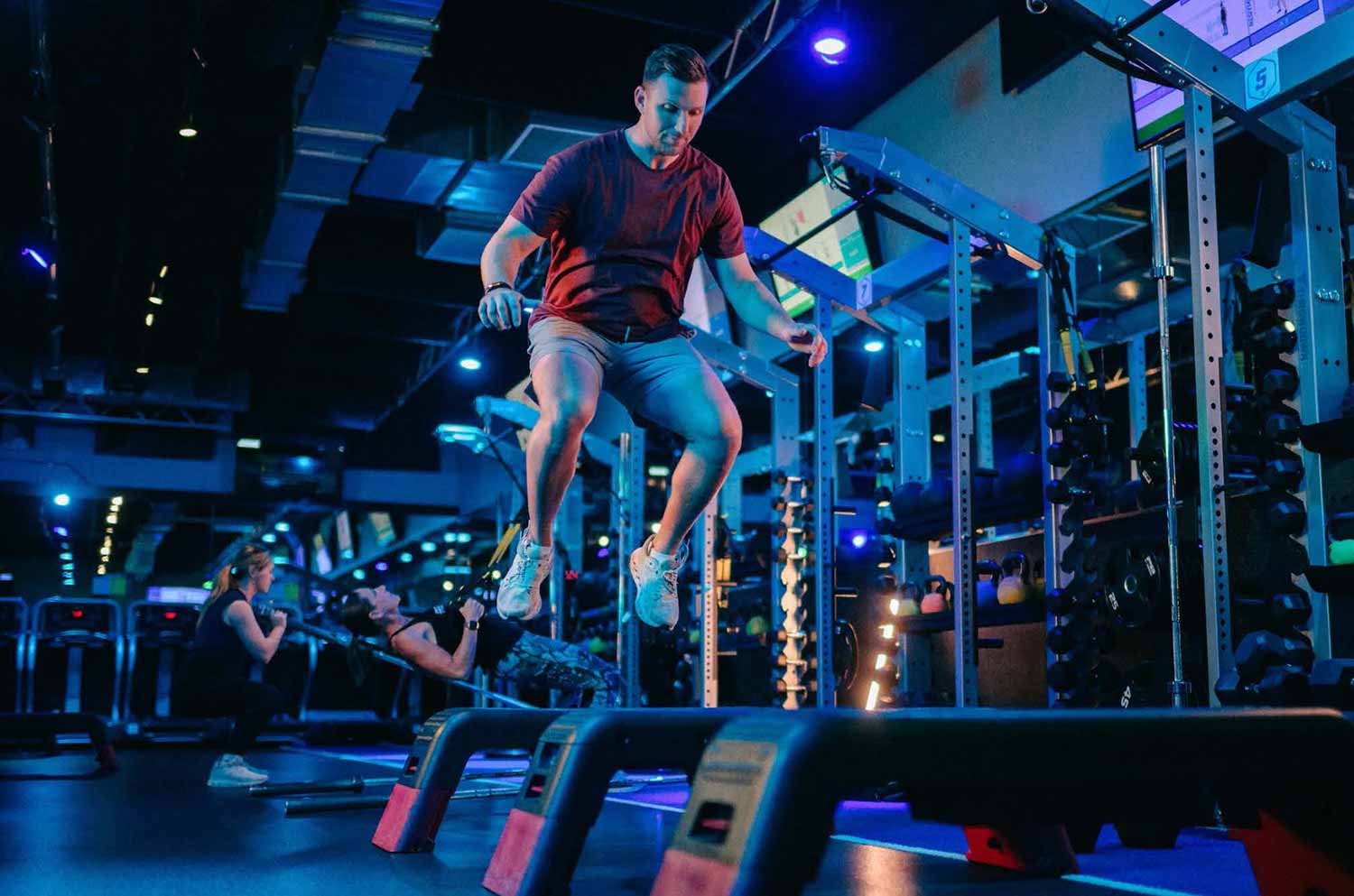
Real member, real coaching — this is what a BUILD session looks like at Regymen.
How Regymen Answers It: The Stack You Already Get
The clinical protocol for protecting yourself on a GLP-1 is coached resistance training, a personal protein target, and body-composition tracking. That is not a special program we invented for this page — it is a standard Regymen membership.
A COACH AT EVERY WORKOUT
Every session is coach-led, in a small group, with your movements scaled to your body. Form is watched, loads are progressed, and nothing is left to guesswork — the exact setup the bone and fall research assumes.
YOUR PROTEIN PLAN FROM COACH L
Every member gets a personalized nutrition and macros plan from Coach L, built from your scan — your protein number, your meals, your low-appetite tactics. Not a printout. A plan, adjusted as you change.
FIT3D SCANS THAT TRACK LEAN MASS
Your membership includes FREE Fit3D scans. The scale can’t tell fat from muscle — the scan can. Re-scans show your lean mass trend line, so we catch muscle loss early and adjust before it costs you.
BUILT FOR OVER 40
This is our specialty — the same coaching behind our Strong After 40 work. Joint-smart, strength-first, and built for people who want to stay capable, not just lighter. See what membership includes on our memberships page.
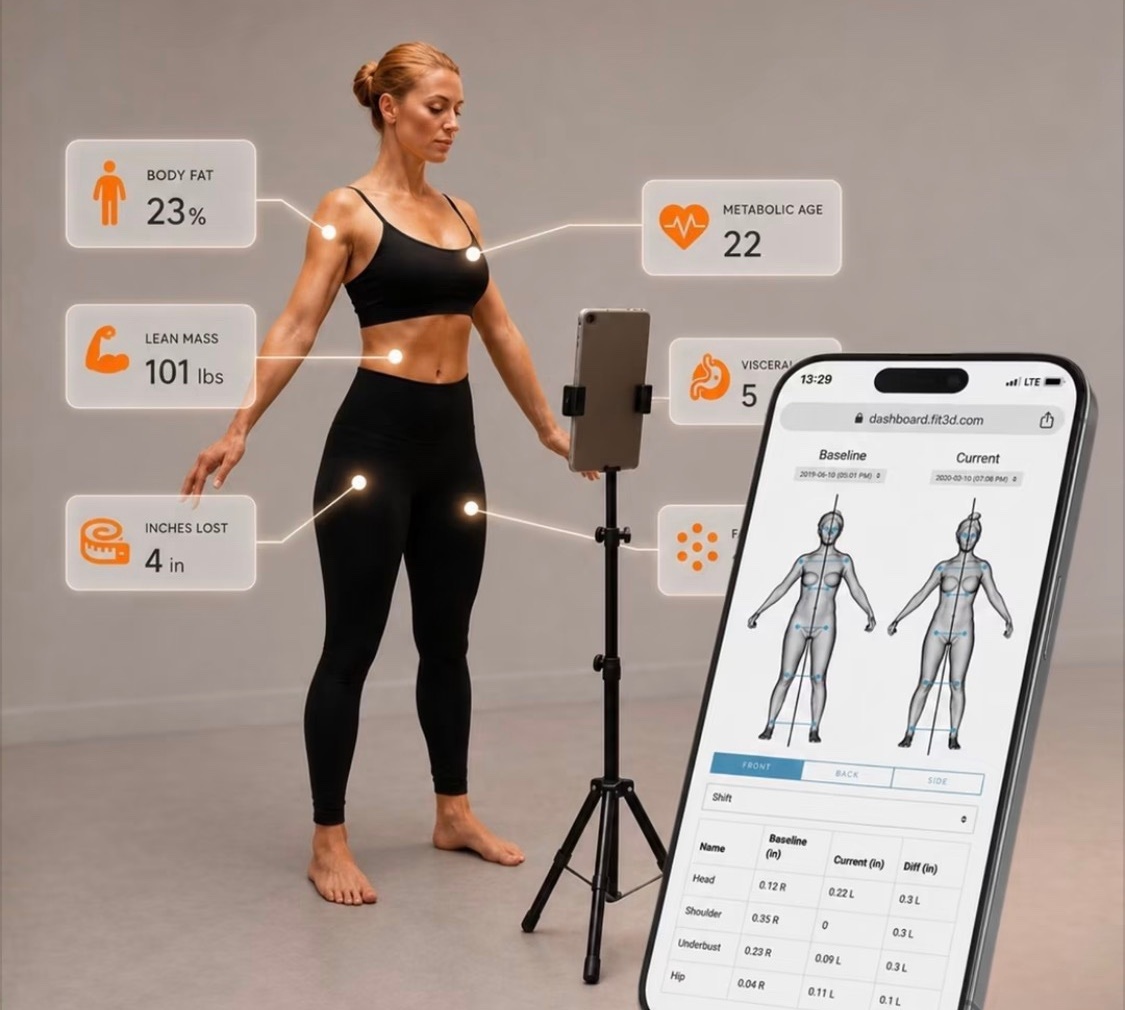
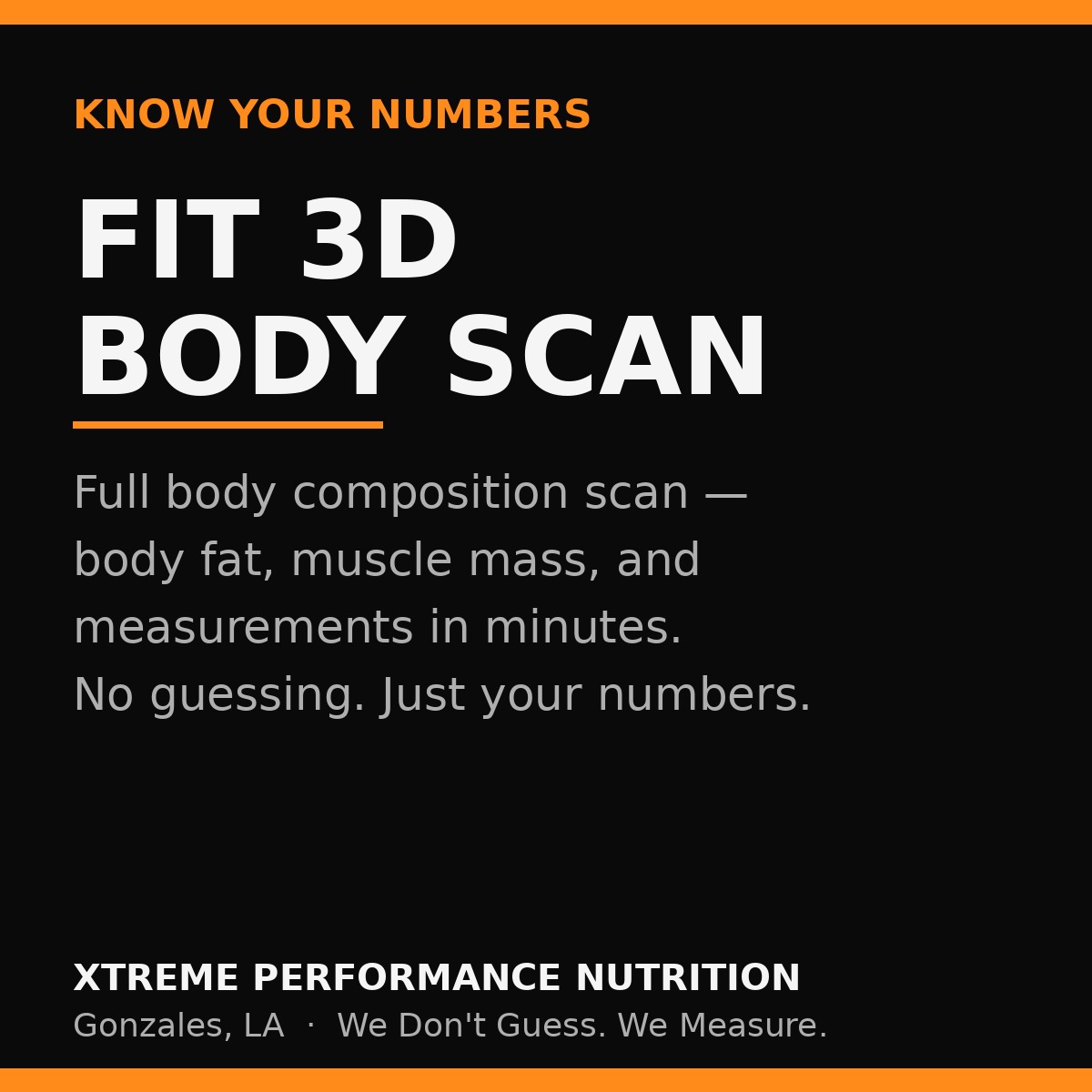
Know your muscle number. Your first scan comes with your free workout.
Already a Regymen Member and On the Shot? This Is About You, Too
If you’re one of ours, you’re already doing the two things that protect you — training with a coach and eating to a plan. Here’s how we make that count: we watch your Fit3D scans together, so your lean-mass trend is a number we manage, not a surprise. At a plateau, we adjust your protein and your training before we adjust anything else. And if the day comes when you and your provider decide to come off the medication, the muscle you built is what keeps the result — in the STEP 1 follow-up, people regained about two-thirds of the lost weight within a year of stopping, and regained weight skews fat. Muscle is the difference between keeping your new body and renting it.
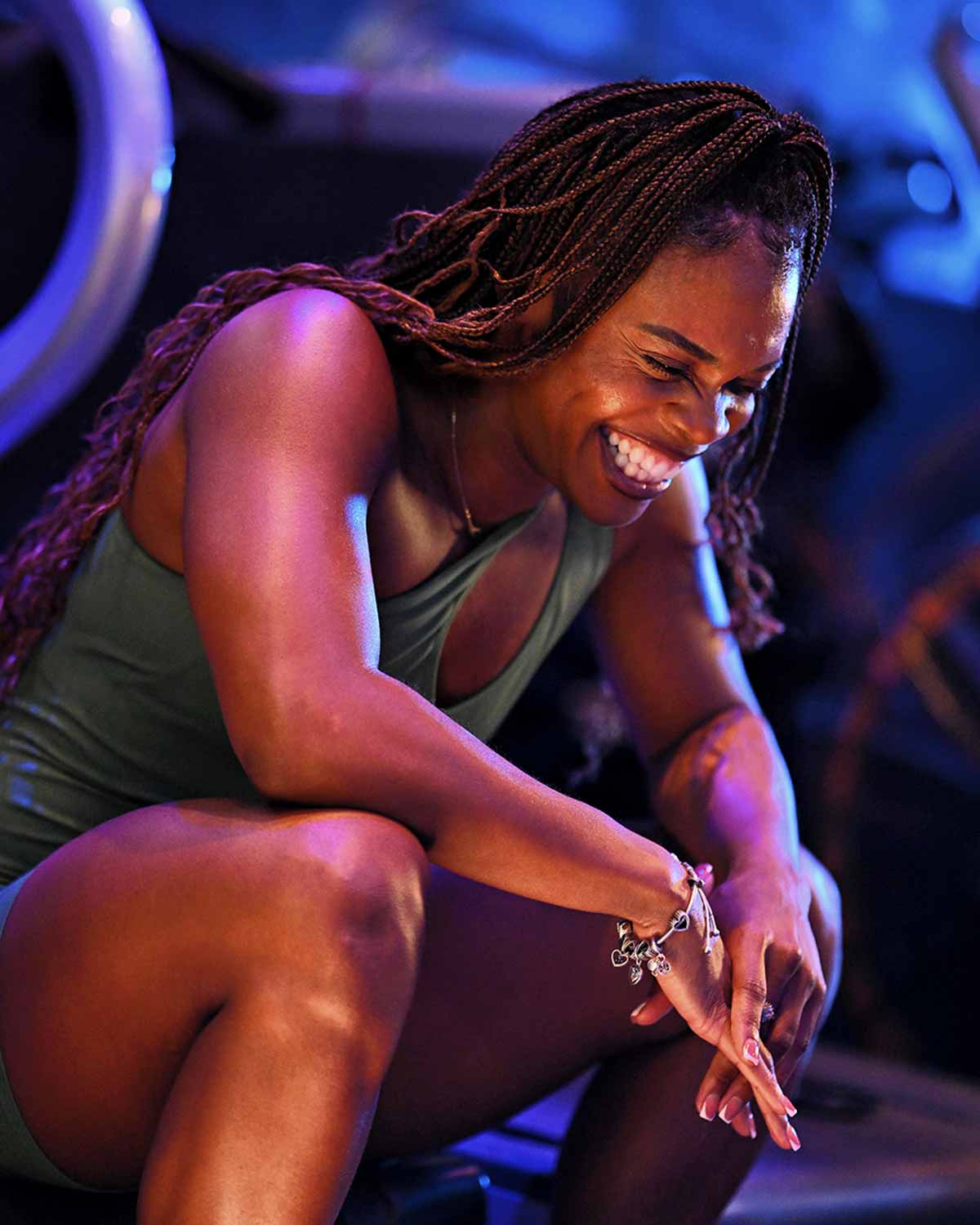
Your people, your coaches, your corner of Ascension Parish.
This Is What Training Here Actually Looks Like
Battle ropes at a Regymen community workout — coached, scaled, and loud in the best way.
Questions People Ask Us About GLP-1s, Muscle, and Bone
How do I prevent muscle loss on Ozempic?
Two things, done consistently: strength training two to three times a week, and protein at 1.2–1.6 grams per kilogram of body weight per day. In the trial reviews, adding resistance training cut the lean-mass share of weight lost roughly in half compared with the medication alone. A body-composition scan every few months tells you whether it’s working.
How much of the weight lost on a GLP-1 is muscle?
Studies measure lean mass, which includes muscle plus water and other tissue. On semaglutide (Ozempic/Wegovy), about 39–40% of the weight lost in the STEP 1 trial was lean mass; on tirzepatide (Mounjaro/Zepbound) it was about 25% in SURMOUNT-1. Skeletal muscle is roughly half of lean mass — so the honest answer is: a lot, and enough to matter, especially after 40.
How much protein should I eat on a GLP-1?
The range clinicians point to during active weight loss is 1.2–1.6 grams per kilogram of body weight daily — for most people, 25–40 grams at each meal. On a suppressed appetite, protein-first eating, smaller meals more often, and shakes or Greek yogurt when food won’t go down are how our members actually hit it. Your Coach L plan sets your exact number from your scan.
Is walking enough exercise while I’m on a GLP-1?
Walking is great for your heart and your head — keep doing it. But it doesn’t load your muscles or bones enough to protect them during fast weight loss, and it doesn’t train balance. The research is consistent: you need progressive resistance training on top of your steps.
Does Ozempic cause bone loss?
Rapid weight loss itself thins bone, because a lighter body loads the skeleton less — that’s settled science with or without a drug. Early GLP-1 studies show hip and spine density declines in the same range as other rapid weight loss (about 2.6% at the hip in one year in the bone-specific semaglutide trial). Whether the medications raise fracture rates isn’t proven — researchers are watching the oldest users. What is proven: resistance training and adequate protein during weight loss significantly reduce the bone loss.
What is the best exercise for bone density over 60?
Supervised, progressive resistance training built on compound movements — squats, deadlift patterns, presses — plus balance and functional work. In the LIFTMOR trial, postmenopausal women with low bone mass who trained that way twice a week gained spine bone density while the control group lost it. Supervision matters: across 2,600+ coached sessions there was one minor back spasm.
How do I prevent falls after losing a lot of weight?
Train the things a fall tests: leg strength, balance, reaction, and getting up off the floor. In a Cochrane review of 108 trials, balance and functional exercises cut fall rates by about 24%, and combining them with resistance training cut falls by roughly a third. That combination is exactly what a coached functional workout is.
How do I know if I’m losing muscle or fat?
Your bathroom scale can’t tell you — it only sees total weight. A body-composition scan can. Our Fit3D scans track your lean mass over time, and simple strength checks (grip, chair stands, the loads you lift) confirm it. If the scale is dropping and your strength is holding, you’re losing the right tissue.
Can I build muscle while on Ozempic or Mounjaro?
Yes — it’s harder in a calorie deficit and after 50, which is why the protein target and progressive loads matter, but members do it here regularly. At minimum, training holds your muscle while the fat comes off; for many people, especially beginners, strength and lean mass actually go up.
What happens when I stop the shot?
In the STEP 1 follow-up study, people regained about two-thirds of the lost weight within a year of stopping semaglutide — and regained weight tends to come back as fat, not muscle. That’s the strongest argument for building muscle and habits while you’re on it: muscle raises what you burn, steadies your appetite, and gives the result something to stand on. Always make stopping decisions with your provider.
Start With Your Muscle Number
Your first step is free: a coached workout, a FREE Fit3D scan, and a free personalized nutrition plan from Coach L. In about five minutes on the scanner you’ll know your muscle number — and we’ll show you exactly how we protect it while the weight comes off.
Book My Free Workout + Fit3D Scan
Want the full picture first? See what a Regymen membership includes.
This page is educational only and is not medical advice. Regymen Fitness Ascension does not prescribe, sell, or recommend any medication, including GLP-1 medications such as Ozempic, Wegovy, Mounjaro, or Zepbound. Always talk to your prescribing provider about anything medication-related — and before changing your protein intake if you have a medical condition such as kidney disease. Our lane is the training, the food, and the follow-through.